
Pituitary Tumor Treatment in Hampton, Stockbridge & Atlanta, GA
A pituitary tumor can affect much more than one small area at the base of the brain. Depending on its size and the type of cells involved, a tumor may interfere with hormone production, affect vision, cause headaches, or create other neurologic and physical changes.
At Nova Brain and Spine, we provide comprehensive evaluation and surgical treatment for pituitary tumors, including endoscopic endonasal pituitary surgery. Our approach combines advanced cranial neurosurgical expertise with careful, evidence-based decision-making and direct access to the neurosurgeon responsible for your care.
Dr. Marcus Stephens has particular expertise in brain tumor surgery and completed additional fellowship training in skull base and open cerebrovascular neurosurgery after residency. Nova Brain and Spine serves patients in Hampton, Stockbridge, Atlanta, GA, and throughout the surrounding region who need answers about a pituitary tumor, a second opinion on a recommended procedure, or advanced surgical care. Schedule your consultation online today to get started.
3
Hospital partners across metro Atlanta
~1 week
Typical wait to be evaluated by a neurosurgeon
4–6 wks
General framework for surgical healing
2
Fellowship-trained neurosurgeons on your case
Quick Links
Jump to any section on this page.
- What Is a Pituitary Tumor?
- Why Choose Nova Brain and Spine for Pituitary Tumor Treatment?
- What Symptoms Can a Pituitary Tumor Cause?
- How Is a Pituitary Tumor Evaluated?
- Does Every Pituitary Tumor Require Surgery?
- Endoscopic Endonasal Pituitary Tumor Surgery
- When Might a Different Surgical Approach Be Needed?
- Advanced Technology in Cranial Surgery
- What to Expect at Your Pituitary Tumor Consultation
- Preparing for Pituitary Tumor Surgery
- Recovery After Pituitary Tumor Surgery
- Second Opinions for Pituitary Tumors
- Independent Practice, Piedmont Healthcare Partnership
- Schedule a Pituitary Tumor Consultation
- Pituitary Tumor FAQs
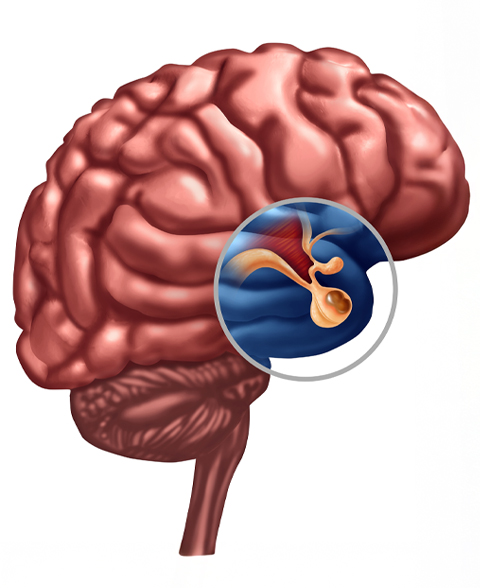
What Is a Pituitary Tumor?
The pituitary gland is a small gland located at the base of the brain. Despite its size, it plays an important role in regulating hormones that influence functions throughout the body.
Most pituitary tumors are noncancerous growths called pituitary adenomas. Some produce excess hormones, while others can interfere with normal pituitary function or create problems because of their size and location.
A pituitary tumor may be discovered because it is causing symptoms, because laboratory testing identifies an abnormal hormone level, or incidentally during brain imaging performed for another reason.
The significance of a pituitary tumor depends on more than whether a growth is present. Its size, hormone activity, location, relationship to surrounding structures, and effect on the individual patient all influence what should happen next.
Why Choose Nova Brain and Spine for Pituitary Tumor Treatment?
As Georgia’s Comprehensive Brain and Spine Center, Nova Brain and Spine combines the breadth expected of a neurosurgical referral center with the direct access and personal attention of an independent practice.
Advanced Training in Skull Base Neurosurgery
The pituitary gland sits deep at the base of the brain in an area surrounded by important nerves and blood vessels. Treating tumors in this region requires careful surgical planning and an understanding of complex skull-base anatomy.
Dr. Stephens completed additional fellowship training in skull base and open cerebrovascular neurosurgery following residency. His areas of focus also include benign and malignant brain tumors, minimally invasive brain tumor surgery, cerebral aneurysm surgery, cerebral bypass, microvascular decompression, Gamma Knife radiosurgery, and awake craniotomy for selected complex tumors.
A Comprehensive Cranial Neurosurgery Practice
Nova Brain and Spine was built to manage a broad spectrum of neurosurgical disease rather than a narrow set of procedures.
Dr. Stephens and Dr. Jerry Walters trained together at the University of Arkansas for Medical Sciences, a high-volume tertiary neurosurgical center and Level I trauma center. That training exposed them to a wide range of complex brain and spine conditions and helped shape the comprehensive practice they operate today.
You See Your Neurosurgeon
A diagnosis involving a tumor at the base of the brain often brings questions that deserve time and direct answers.
At Nova Brain and Spine, you meet with the neurosurgeon responsible for your care rather than being evaluated primarily by a physician assistant or nurse practitioner. Dr. Stephens and Dr. Walters remain personally involved throughout the surgical process, including hospital care and postoperative follow-up.
Timely Access to Answers
Waiting months for a neurosurgical consultation can add another layer of uncertainty to an already difficult diagnosis.
Dr. Stephens and Dr. Walters oversee the intake process directly, and patients can often see one of the surgeons within days or about a week, rather than waiting several months.
Evidence-Based Care With a Human Connection
Nova Brain and Spine was designed as an evidence-based, technically excellent, and humanistic neurosurgical referral center.
That means applying contemporary neurosurgical standards while remembering that the person sitting in the consultation room is dealing with much more than an MRI result. We explain difficult diagnoses clearly, give patients time to ask questions, and tailor treatment recommendations to the individual rather than follow a standardized pathway.
As Georgia’s Comprehensive Brain and Spine Center, we aim to provide the sophistication expected of a major neurosurgical center while preserving the access and personal attention of an independent practice.

What Symptoms Can a Pituitary Tumor Cause?
Some pituitary tumors produce no noticeable symptoms. Others can cause problems by affecting hormone levels or pressing on nearby structures.
Possible symptoms may include:
- Headaches
- Changes in peripheral or overall vision
- Double vision
- Menstrual changes
- Sexual function or fertility changes
- Abnormal breast milk production
- Changes related to excessive or insufficient hormone production
Larger tumors may affect the optic pathways located above the pituitary gland, which is why vision changes can be an important part of a pituitary tumor evaluation.
Symptoms vary widely depending on the type of tumor. Having one of these symptoms does not necessarily mean that you have a pituitary tumor, but an established pituitary abnormality deserves careful evaluation in the context of your symptoms and testing.
How Is a Pituitary Tumor Evaluated?
A complete evaluation may involve several different types of information.
Imaging
MRI is commonly used to evaluate the pituitary gland and surrounding structures. Dedicated pituitary imaging can provide detailed information about a tumor’s size and location and whether it extends toward nearby structures such as the optic pathways or cavernous sinuses.
Hormone Testing
Because the pituitary gland regulates multiple hormone systems, blood testing may determine whether a tumor produces excess hormones or affects normal pituitary function.
Vision Testing
When a tumor is near the optic nerves or optic chiasm, formal visual-field testing may help determine whether vision has been affected.
Your neurosurgical evaluation then brings those findings together. At Nova Brain and Spine, we do not base a recommendation on imaging alone. We consider what the imaging shows in the context of your symptoms, testing, overall health, and how the condition affects your life.
Does Every Pituitary Tumor Require Surgery?
No. Not all pituitary tumors are treated the same way. Depending on the tumor type, size, hormone activity, symptoms, and surrounding anatomy, management may include observation, medication, surgery, radiation therapy, or a combination of treatments. Certain hormone-producing tumors may respond particularly well to medication, while other tumors are more likely to require surgical treatment.
This is one reason an individualized evaluation matters. The presence of a pituitary tumor does not automatically determine the treatment. The question is what that particular tumor is doing and which approach best addresses it.
Minimally invasive spine surgery is an important part of our practice. These procedures use specialized instrumentation and surgical approaches designed to reach the affected area through a more limited surgical corridor when the diagnosis and anatomy make that approach appropriate.
A minimally invasive technique is not automatically the best option for every spine problem. The procedure still has to fully address the condition that brought you to surgery in the first place.
Our surgeons routinely use minimally invasive instrumentation in spine surgery, along with intraoperative navigation to help guide the procedure. We also work with a dedicated intraoperative neuromonitoring team that can monitor critical neurologic function in real time during surgery.
Endoscopic Endonasal Pituitary Tumor Surgery
Endoscopic endonasal surgery is an important surgical approach for pituitary tumors and a key area of focus at Nova Brain and Spine.
Rather than approaching the pituitary gland through an opening in the skull, an endoscopic endonasal approach creates a surgical corridor through the nasal passages and sphenoid sinus to reach the pituitary region at the base of the brain.
The approach does not require a visible external incision. An endoscope provides a close view of the surgical field as the surgeon works through the natural nasal corridor toward the tumor.
For appropriately selected tumors, this route can provide direct access to the pituitary region without passing through normal brain tissue.
Whether an endoscopic endonasal procedure is appropriate depends on the individual tumor and its relationship to surrounding structures.
When Might a Different Surgical Approach Be Needed?
Endoscopic endonasal surgery is commonly used for pituitary tumors, but it is not the appropriate approach for every possible tumor configuration.
Large or complex tumors may extend into areas where another strategy needs to be considered. The surgical plan must account for the tumor’s size, direction of growth, involvement of nearby nerves or blood vessels, and what can be treated safely.
Rather than starting with a procedure and trying to fit the patient into it, we want to understand the patient’s anatomy first and determine which approach makes the most sense for that individual situation.
Second Opinions for Pituitary Tumors
Being told that you have a brain tumor or may need surgery can make it difficult to know whether you have considered every reasonable option. Nova Brain and Spine provides second-opinion consultations for patients who want another neurosurgical perspective.
We handle a second opinion much like another consultation. We review the available imaging, medical history, testing, previous treatment, and recommendations that you have already received.
For a pituitary tumor, the goal is not simply to tell you whether another doctor’s recommendation is right or wrong. It is to help you better understand what the tumor is doing, whether treatment is necessary, and which approach makes the most sense for you.
Advanced Technology in Cranial Surgery
Nova Brain and Spine routinely incorporates modern neurosurgical technology when it improves surgical planning or provides meaningful information during an operation.
Dr. Stephens and Dr. Walters routinely use intraoperative navigation in cranial surgery. The practice also works with a dedicated intraoperative neuromonitoring team to monitor important neurologic function in real time during appropriate procedures.
Dr. Stephens is also trained in NICO BrainPath®, a minimally invasive tubular retractor system used in selected deep brain tumor procedures. His broader use of minimally invasive cranial techniques reflects the same principle that guides pituitary surgery: reach the area that needs treatment while minimizing unnecessary disruption to surrounding structures.
Not every technology is appropriate for every pituitary tumor. Surgical tools support the operation; the anatomy and clinical situation determine the plan.
What to Expect at Your Pituitary Tumor Consultation
Bring your imaging on a CD
If possible, bring your imaging on a CD along with the corresponding radiology reports and any records from physicians who have already evaluated the condition. Nova Brain and Spine also encourages you to bring a family member or another trusted person who helps with healthcare decisions.
Meeting Your Surgeon
You will meet directly with your neurosurgeon. This consultation may include discussion of your imaging, symptoms, hormone-related findings, previous evaluations, and the available treatment options. If surgery is being considered, we want you to understand why it is being recommended and what the proposed procedure is intended to accomplish.
No-Rush Consultations
Serious diagnoses should not be rushed. Dr. Stephens and Dr. Walters have specifically built their practice around giving patients and families the time needed to understand significant neurosurgical decisions.
Where We Operate
Nova Brain and Spine is an independent neurosurgical practice partnered with the Piedmont Healthcare system. Our surgeons perform procedures at:
- Piedmont Atlanta Hospital
- Piedmont Fayette Hospital
- Piedmont Henry Hospital
Preparing for Pituitary Tumor Surgery
If surgery is recommended, preparation includes more than choosing a date.
Our team will discuss what to expect before and after the procedure, including any required pre-anesthesia evaluation and additional medical appointments related to surgical preparation.
You should attend all requested preoperative appointments and make sure you understand postoperative expectations before surgery day.
On the day of your procedure, the nursing and anesthesia teams will prepare you in the preoperative area, and your neurosurgeon will see you before surgery.
If you require inpatient care afterward, your surgeon remains involved throughout your hospital stay.
Talk With a Neurosurgeon About Your Brain & Spine
At Nova Brain and Spine, your relationship is directly with your surgeon — before, during, and after your operation.

Jerry Walters, MD
NEUROSURGEON · COMPLEX & MINIMALLY INVASIVE SPINE
Dr. Walters focuses on complex spine surgery and complex spinal revisions, and is among a limited number of neurosurgeons in Georgia performing OptiLIF ultra-minimally invasive lumbar fusion.
AREAS OF FOCUS
- Complex spine surgery
- Spinal revisions
- OptiLIF
- Minimally invasive fusion

Marcus Stephens, MD
NEUROSURGEON · BRAIN & SPINE
Dr. Stephens performs a wide range of spine procedures and evaluates complicated neurologic and spinal problems from a neurosurgical perspective, including trauma and metastatic spinal disease.
AREAS OF FOCUS
- Cervical fusion
- Lumbar fusion
- Spinal trauma
- Spinal tumors
Recovery After Pituitary Tumor Surgery
Recovery varies according to the tumor, surgical approach, extent of the procedure, your overall health, and other individual factors. Before leaving the hospital, you will receive postoperative instructions and information about contacting your surgeon if questions or concerns arise.
~10 days
First postoperative visit
Our typical surgical follow-up protocol includes an appointment with your surgeon approximately 10 days after surgery.
4–6 weeks
Surgical site healing
Nova Brain and Spine generally advises surgical patients that it may take about four to six weeks for the operative area to heal and for them to feel more like themselves. However, recovery differs considerably from one operation to another. Our surgeons provide specific postoperative guidance according to the procedure performed.
Until Healed
Monitor Hormones & Fluids
After pituitary surgery specifically, additional monitoring may also be necessary because treatment can affect pituitary hormone function and the body’s regulation of water and sodium. Your treating team determines what testing and follow-up are appropriate for your individual case.
Schedule a Pituitary Tumor Consultation
A pituitary tumor can raise questions about your brain, vision, hormones, treatment options, and what the future may look like. Those questions deserve clear answers from a physician who understands both the condition and the complex anatomy surrounding it.
At Nova Brain and Spine, you will meet directly with a neurosurgeon who will review your imaging and clinical information, explain what we see, and discuss the options that make sense for your situation.
If you have been diagnosed with a pituitary tumor or are seeking another opinion about pituitary tumor surgery in Hampton, Stockbridge, Atlanta, GA, or the surrounding region, contact Nova Brain and Spine to schedule a consultation.
Pituitary Tumor FAQs in Hampton – FAQs
Still have questions?
Speak directly with the neurosurgeon who would be responsible for your care.
Are pituitary tumors cancerous?
Most pituitary tumors are benign, meaning they are not cancer. Even a noncancerous pituitary tumor can require treatment if it affects hormone production, vision, nearby structures, or other aspects of health.
Can a pituitary tumor affect my hormones?
Yes. Some pituitary tumors produce excess hormones, while larger tumors can interfere with the gland’s normal hormone production. The specific effects depend on the type of tumor and which hormone systems are involved.
Can a pituitary tumor cause vision problems?
Yes. The pituitary gland is located near the optic pathways. A tumor that grows upward can affect these structures and may cause changes such as loss of peripheral vision or other visual disturbances.
Does every pituitary tumor need to be removed?
No. Treatment depends on factors including the tumor type, size, hormone activity, symptoms, and growth. Depending on the individual case, doctors may consider observation, medication, surgery, radiation, or a combination of treatments.
Our practice generally advises patients that hospital stays after procedures such as spinal fusion average approximately three to five days, although many patients are discharged sooner. Your expected stay will depend on the operation and your individual recovery.
What is endoscopic endonasal pituitary surgery?
Endoscopic endonasal surgery is a minimally invasive approach that reaches the pituitary region through the nasal passages and sphenoid sinus using an endoscope. It avoids a visible external incision and provides access to many pituitary tumors through the natural nasal corridor.
Will pituitary surgery require opening my skull?
Not necessarily. Many pituitary tumors can be treated through the nose using an endoscopic endonasal, or transsphenoidal, approach. A different approach may be considered for selected tumors depending on their size and extension into surrounding areas.
Yes. Direct physician involvement is an important part of how we practice. If you are admitted to the hospital, your surgeon continues to see you during your stay. After discharge, our typical protocol includes a postoperative incision check approximately 10 days after surgery.
Who treats pituitary tumors?
Pituitary tumors are often treated by a team that includes a neurosurgeon, who evaluates whether surgery is appropriate and which approach may be used. Treatment can involve more than one specialty because pituitary tumors may affect both the brain and the endocrine system, and the exact team depends on the tumor and the individual patient’s needs.
Can I get a second opinion before pituitary tumor surgery?
Yes. Nova Brain and Spine offers second-opinion consultations. You can bring your imaging, radiology reports, prior records, and treatment recommendations so our neurosurgeons can evaluate the case and discuss the options with you.
What should I bring to my pituitary tumor consultation?
Bring your available imaging on a CD, corresponding radiology reports, relevant medical records, and any other testing related to the diagnosis. If someone helps you make healthcare decisions, we also encourage you to bring them to the appointment.
How quickly can I see a neurosurgeon at Nova Brain and Spine?
The surgeons stay directly involved in the intake process, and patients can often get an appointment within days or about one week, depending on scheduling and the individual situation.